Skip to content
KUNTA KINTE
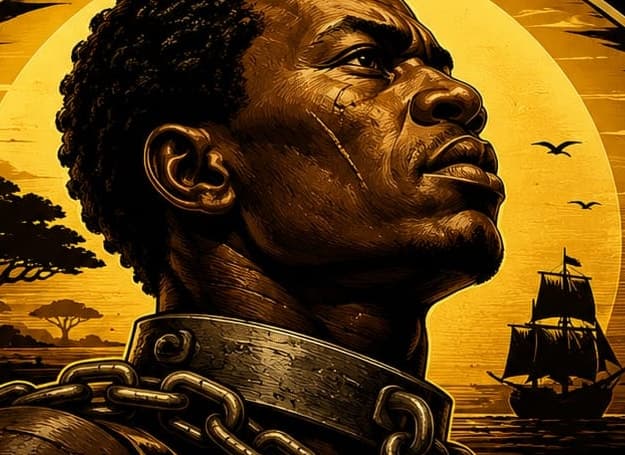
Illustration of a man in an iron collar looking toward the horizon at sunset, with an acacia tree and a sailing ship behind him.

Honor the past · Build the future

KUNTA KINTE

A meme coin with a memory. A community with a purpose. A history that must not be forgotten.

KUNTA KINTE uses memes, blockchain, community and storytelling to keep important African histories and stories alive for a new generation.

Artwork from the KUNTA KINTE emblem

About KUNTA KINTE

More than a meme coin. A movement to remember.

KUNTA KINTE is a community-driven meme coin created to raise awareness, preserve collective history, and keep important stories of Africa and its people alive for future generations.

Our inspiration comes from the story of Kunta Kinte, a symbol of identity, resilience, heritage, and the importance of remembering where we come from.

As the way history is taught continues to evolve, we believe communities must take an active role in preserving the stories that matter.

KUNTA KINTE uses the power of memes, blockchain, community, storytelling, and digital culture to bring history into conversations that reach a new generation.

Our mission

  1. I

    Remember the past.

  2. II

    Question the narratives.

  3. III

    Preserve the history.

  4. IV

    Restore perspective.

  5. V

    Inspire the future.

A conversation about perspective

How a map can shape what we believe

The Mercator projection, widely used for hundreds of years, dramatically distorts the relative size of countries and continents. Today, we want to help spark conversations about how maps, history, and narratives shape our understanding of the world.

Africa deserves to be seen, not only through the stories others have told about it, but through its true geographical scale, history, cultures, and contributions to humanity.

Squares drawn to scale by approximate land area: Africa about 30.4 million km², Greenland about 2.2 million km². On a Mercator map, the two look similar in size.
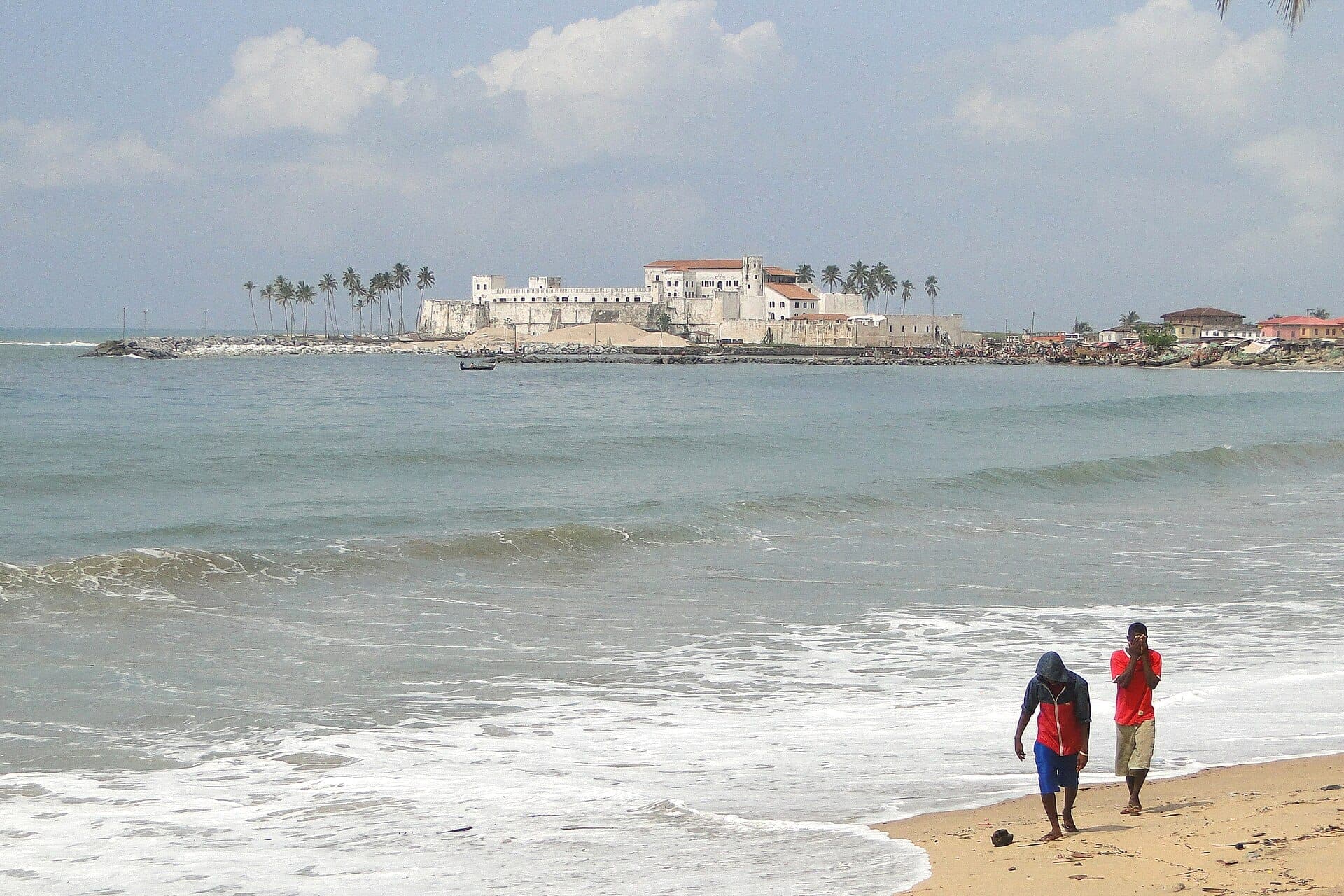
St. George's Castle, known as Elmina Castle, seen from the seashore.

The virtual museum

Labseighttweentysix

An archive of memory.

LABSEIGHTTWEENTYSIX preserves stories, places, people and memories connected to African history and the transatlantic slave trade.

Enter the museum

Image: Elmina Castle from the seashore · Adam Jones · CC BY-SA 2.0 · Wikimedia Commons

Inside the museum

World History at a Glance: Africa

A chronological journey through African history, from ancient civilizations to the modern era.

Explore African history

Roadmap

2026 — 2036

  1. 2026 — 2028

    Launch & Foundation · Community & Research · First Book & Museum Development

  2. 2029 — 2031

    Virtual Museum · Global Recognition · Digital Heritage & Global Archive

  3. 2032 — 2034

    Education · African Memory Project · AI Historical Exploration

  4. 2035 — 2036

    Heritage Archive · Legacy Year

View full roadmap

Community

Join the movement

KUNTA KINTE is a community-driven meme coin with a purpose: remembering and preserving African history for a new generation.

Network

Solana

Contract address

6uRcoSCgskDSm7zJr82X2jjUrak9ue1vq8Xe1CNmpump

DEX Listing
Coming as the project progresses.
CEX Listing
Future milestone.

Supported Wallets

Wallets you can use with KUNTA KINTE on Solana.

  • Phantom Wallet
  • Bitget Wallet
  • Trust Wallet
  • Solflare
  • MetaMask

Follow KUNTA KINTE on X

The official account for project updates and community conversation.

KUNTA KINTE@KUNTAAKINTEY (opens in a new tab)

FAQ

Questions

Kunta Kinte's story is known through Alex Haley's novel Roots. These answers follow that story, and say where details have been debated.

Who was Kunta Kinte?

Kunta Kinte is a fictionalized historical character from Alex Haley's novel Roots, portrayed as a young African man captured and enslaved in America.

Where was Kunta Kinte born?

He was born in Juffure, a village in present-day The Gambia, according to Roots.

What happened to Kunta Kinte?

He was captured by slave traders, transported across the Atlantic, and enslaved in colonial America.

Why is Kunta Kinte important?

His story symbolizes the brutality of the transatlantic slave trade and the struggle to preserve African identity, dignity, and heritage.

Who wrote Roots?

American author Alex Haley wrote Roots: The Saga of an American Family.

When was Roots published?

Roots was first published in 1976.

What was Kunta Kinte's African heritage?

In Roots, Kunta Kinte is described as a Mandinka Muslim from The Gambia.

What does Kunta Kinte represent?

He represents resistance, cultural identity, family, freedom, and the determination to remember one's origins.

What is Juffure?

Juffure is a village in The Gambia associated with Kunta Kinte through the Roots story and its historical remembrance.

What is Kunta Kinte Island?

Kunta Kinte Island, formerly James Island, is a historic site on the Gambia River associated with the history of the slave trade.

Can Kunta Kinte be considered a completely verified historical person?

No. Kunta Kinte is presented in Roots as an ancestor of Alex Haley, but historians have debated the extent to which the specific genealogy and details can be independently verified.

What was the transatlantic slave trade?

It was a centuries-long system in which millions of Africans were forcibly transported across the Atlantic and enslaved in the Americas and elsewhere.

Why should Kunta Kinte's story still be remembered?

Remembering stories like his helps societies confront the realities of slavery and preserve the history and humanity of those who suffered under it.

What lesson can we learn from Kunta Kinte?

One powerful lesson is that oppression can attempt to take away a person's freedom and identity, but memory, culture, family, and resilience can survive.

What is the greatest message of Kunta Kinte's story?

Never forget where you come from. Remember the past, not to create hatred, but to build a future where human dignity and freedom are protected for everyone.